How Often to Trim Your Hair Over 50
You sit in the salon chair, your stylist holds up the mirror, and the cut looks perfect. Then, three weeks later, the shape starts to go. The ends stick out, the layers fall flat, and you wonder if you waited too long. Or did you book too soon?
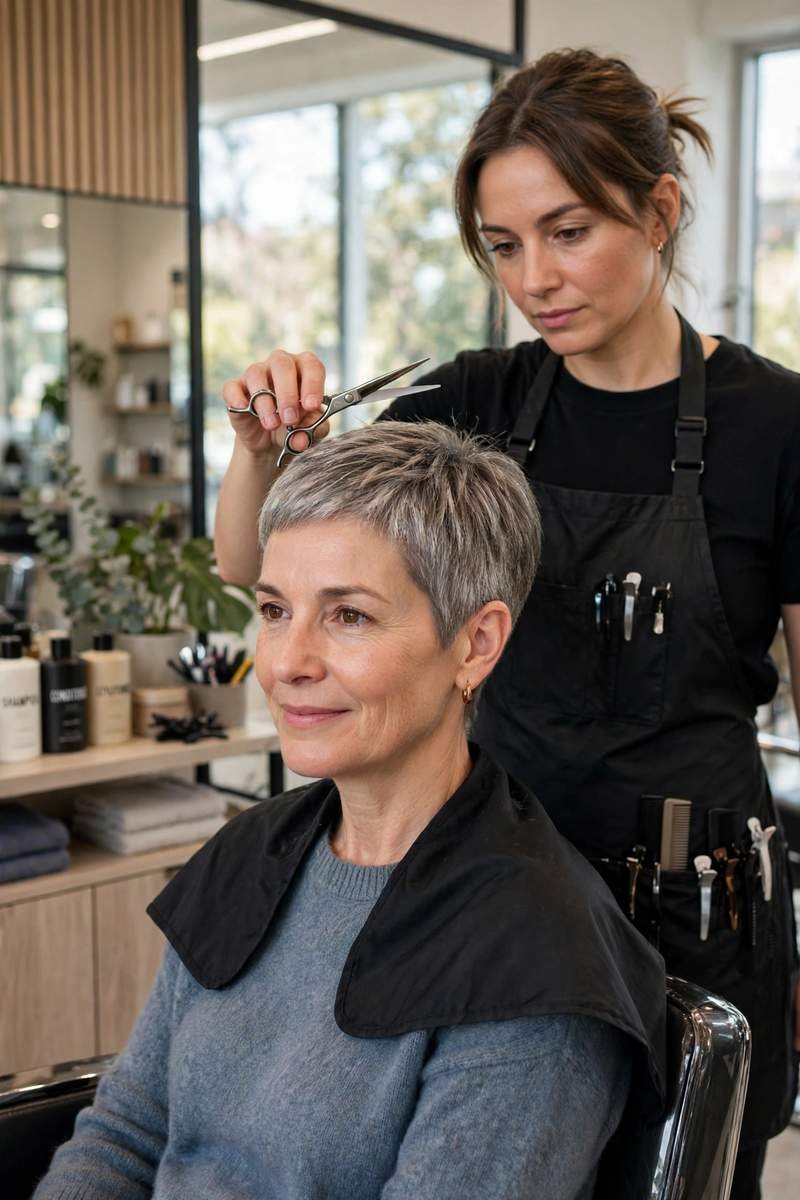
The truth is, there is no single answer to how often you should trim your hair over 50. A short pixie needs a trim far sooner than long layers, and curly hair plays by different rules than fine hair. The right schedule depends on your cut, your hair type, and what you want it to look like.
This guide gives you a clear answer for six common hair situations after 50. Find your cut below, note the timing, and book your next trim before you leave the salon. No more guessing, and no more growing out a cut you loved. Your hair will thank you.
1. Short Pixie: Every 4 to 5 Weeks
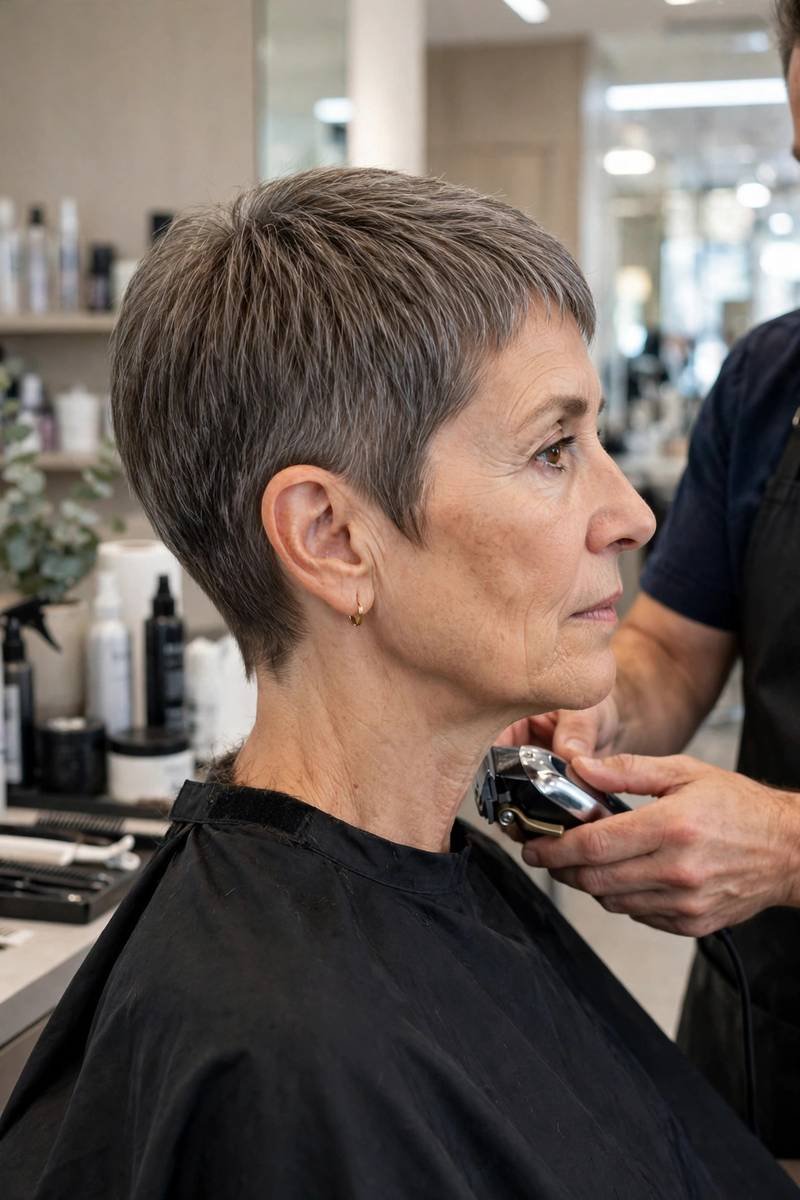
A short pixie is the cut that needs the most frequent trims. The shape lives in the short sides and the tapered nape, and those are the first places where growth shows. After four weeks the nape starts to look fuzzy, the sides lose their clean line, and the top falls flat instead of sitting up. Book a trim every four to five weeks, and the pixie keeps its shape all year. Ask your stylist for a tidy up between full cuts if you want to stretch the gap. A quick nape clean up takes ten minutes and costs far less than a full cut, and it keeps the pixie looking sharp until your next full appointment.
2. Classic Bob: Every 6 to 8 Weeks

A classic bob holds its shape longer than a pixie, but it still needs regular care. The blunt ends are the whole point of the cut, and once they start to split or flip out, the bob loses its clean line. Six to eight weeks is the sweet spot for most women over 50. Wait longer and the ends thin out, the shape turns heavy at the bottom, and the cut starts to look like it is growing out rather than styled. Ask your stylist to take off just a small amount each time. A light dusting of the ends keeps the length you love while the shape stays fresh.
Quick Tip
Ask for a dusting, not a cut. Tell your stylist to take off half an inch or less, so the bob keeps its length and only the damaged ends go.
3. Layered Cut: Every 8 to 10 Weeks

A layered cut is the most forgiving cut on this list. The layers grow out softly, so the shape fades instead of falling apart. That is why you can stretch a layered cut to eight or ten weeks between trims without it looking untidy. The layers still need care, though. After two months the ends can look thin and wispy, and the layers near the face start to blend into one length. A trim every eight to ten weeks brings the layers back and keeps the movement in the cut. If your hair is thick, you may need the shorter end of that range, because thick layers grow heavy faster.
4. Curly Hair: Every 8 to 12 Weeks

Curly hair is different from straight hair, and its trim schedule is different too. Curls spring up as they grow, so the length changes less, and the shape holds longer. Most women over 50 with curls can wait eight to twelve weeks between trims. The key is to trim by shape, not by the calendar. When the curls start to look stretched out at the ends, or the bottom of the cut goes flat while the top stays full, it is time to book. Ask your stylist to cut your curls dry, curl by curl, so the shape follows your real curl pattern. A dry cut shows the true length, and you never lose more than you planned.
What to ask your stylist
5. Fine or Thinning Hair: Every 6 to 8 Weeks

Fine or thinning hair needs trims more often than you might think. Thin ends are the enemy of full looking hair, because they make the whole cut look sparse. A small trim every six to eight weeks keeps the ends blunt and full, and blunt ends always look thicker than wispy ones. Wait too long and the ends go see through, the cut loses its body, and no amount of mousse brings it back. Tell your stylist to take off just the thin tips and keep the length. Short, regular trims protect the fullness you have, and they cost less than trying to fix months of split ends later.
Quick Tip
Blunt ends look thicker. Ask for a straight cut across the bottom, not thinning shears, so fine hair keeps its full edge.
6. Growing It Out: Every 10 to 12 Weeks

Growing your hair out after 50 does not mean skipping trims. In fact, regular trims help it grow, because split ends travel up the hair and break off, which steals your length. Book a trim every ten to twelve weeks and ask for a dusting only. Your stylist takes off a tiny amount from the very ends, just enough to stop the splits, and the length keeps growing. Between trims, be gentle with your hair. Use a wide tooth comb, skip the daily heat, and wear it up on windy days. Small habits like these keep the ends healthy while the length catches up.
“A trim does not slow growth. It stops split ends from breaking off the length you worked so hard to grow.”
A Simple Rule to Remember
When in doubt, book the trim. Short cuts need it every four to six weeks, bobs and fine hair every six to eight, layers and curls every eight to twelve, and growing hair every ten to twelve. Mark your next appointment before you leave the salon, and the decision is made for you. Save this guide, share it with a friend who keeps asking the same question, and enjoy hair that always looks like it was just cut.