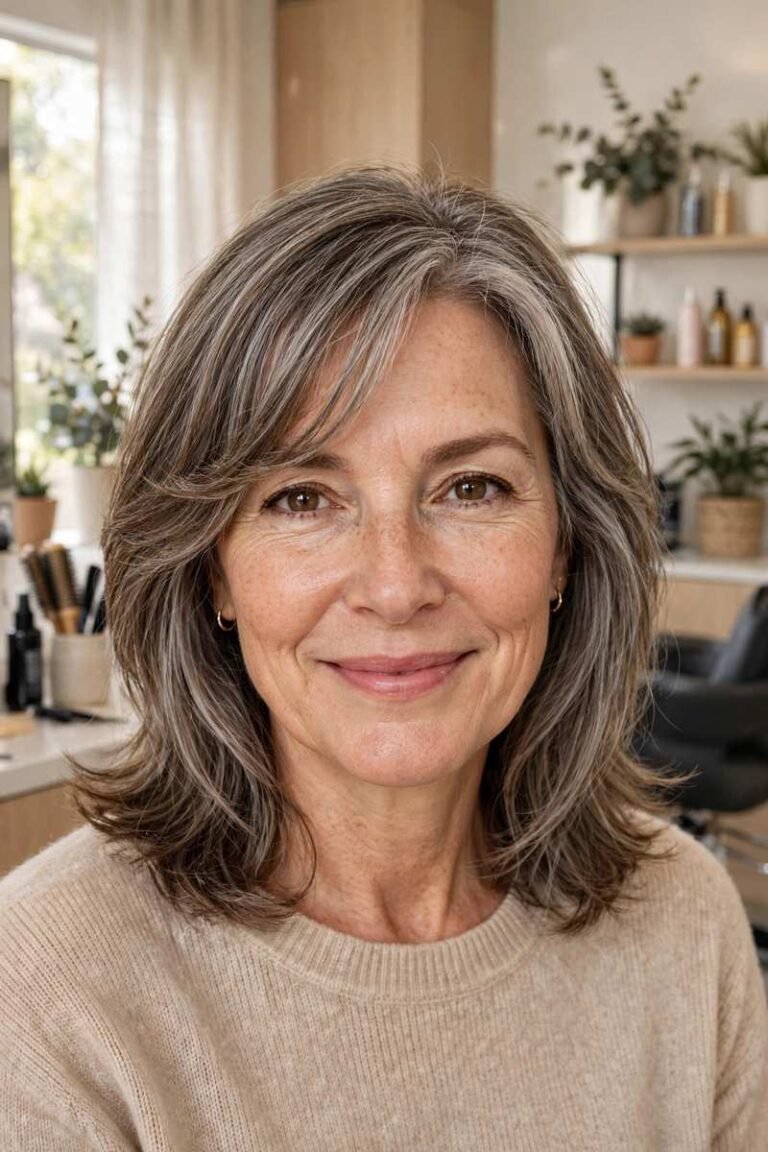
How to Ask Your Stylist for a Pixie Cut Over 60 (Exact Words)
You know you want a pixie cut. You have seen the photos, you have thought about it for weeks, and you have finally booked the appointment. Then you sit in the chair, the stylist asks what you would like, and the words get stuck. You say "short, please" and hope for the best, and you leave with a cut that is not quite what you pictured.
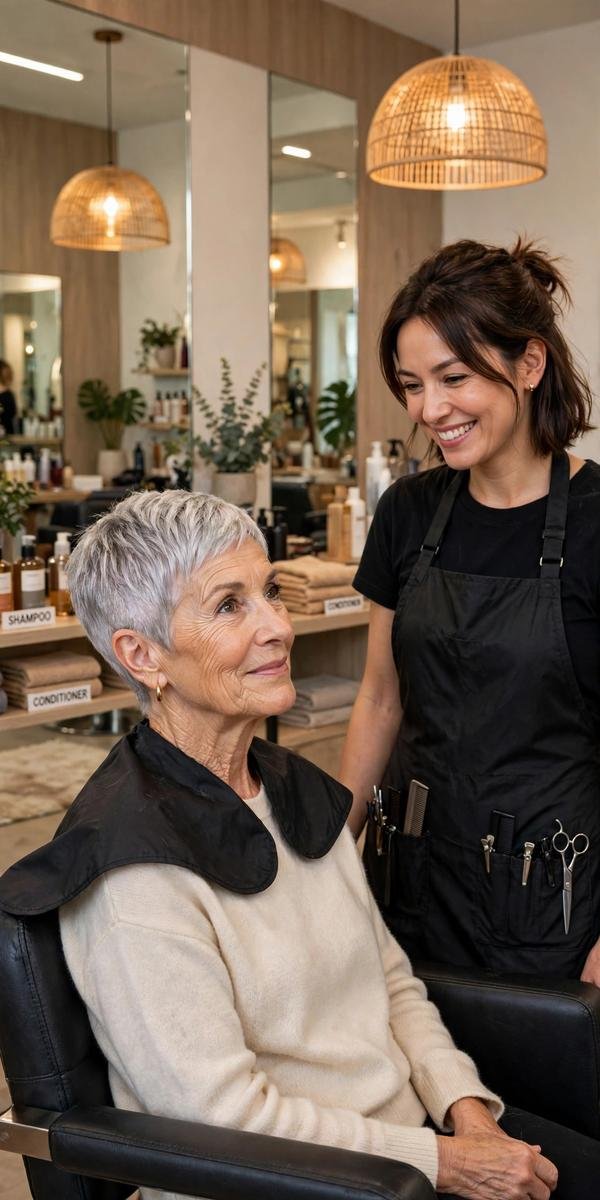
That nervous feeling is normal, and it has a fix. A pixie is a short cut, so every word you say matters more. When you describe it clearly, your stylist can give you exactly what you want, and you can relax in the chair. This guide gives you seven exact phrases to say, one for each part of the cut, so you can walk in knowing what to say and walk out loving your hair.
Read the seven phrases, pick the ones that fit your hair, and say them just as they are written. Your stylist will thank you for being clear, and you will love the result.
1. The Opening Line
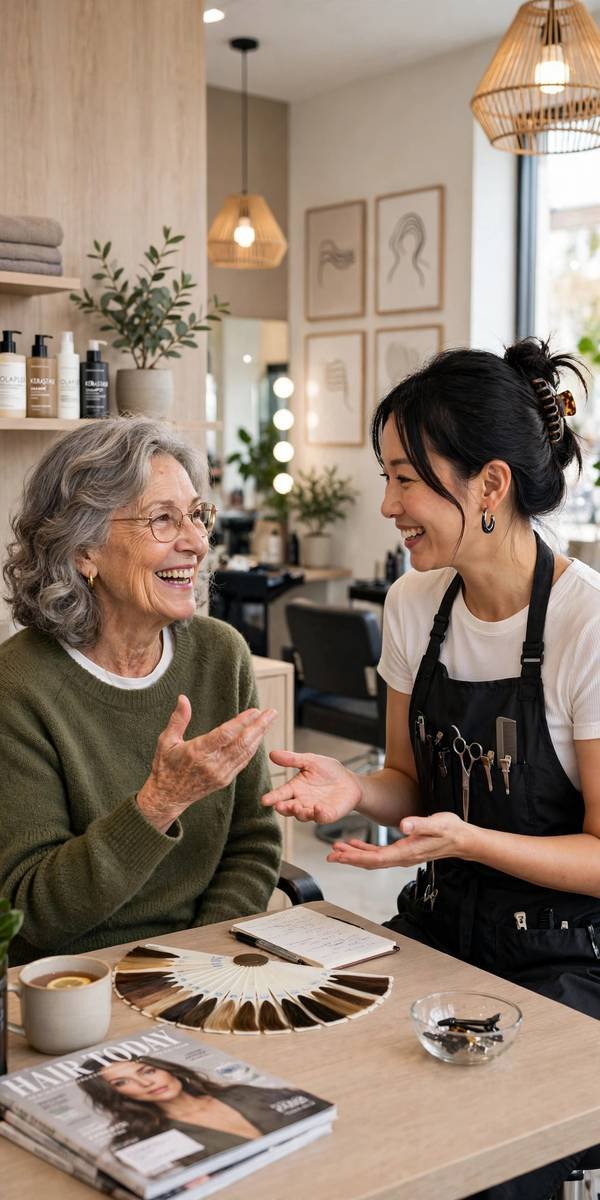
Start with one clear sentence that tells your stylist the whole idea. Say: "I would like a pixie cut that is soft and short, but not severe." Those few words do a lot of work. "Soft" tells the stylist you want gentle edges, "short" sets the length, and "not severe" rules out the sharp, edgy styles you do not want. Most stylists love an opening like this, because it gives them a clear picture before they pick up the scissors. Say it slowly, and let the stylist repeat it back to you. If they nod and smile, you are on the same page, and the rest of the chat gets much easier.
2. Describing the Length
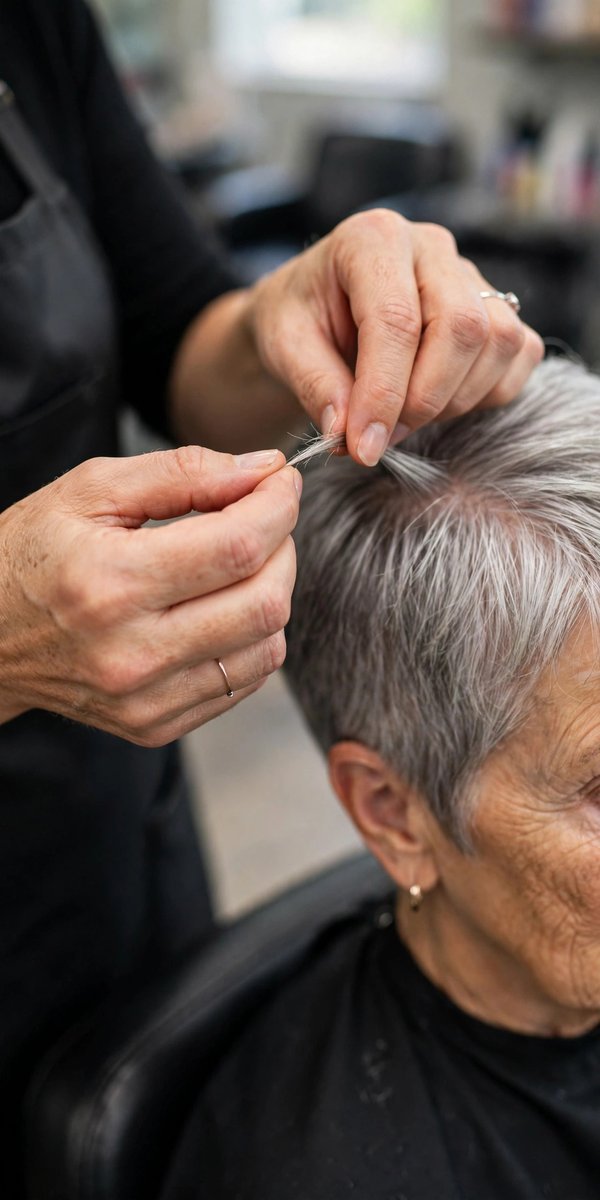
"Short" means different things to different people, so give your stylist a real measure. Say: "Keep the length about an inch on top, and shorter at the sides." An inch is a length your stylist can see and hold between their fingers, so there is no guessing. If an inch sounds too short, say an inch and a half. If you want it shorter, say three quarters of an inch. The number is what matters. You can also show the length with your own fingers while you say it. That small gesture takes away all the doubt, and it keeps the cut from ending up shorter than you wanted.
Quick Tip
Hold your thumb and finger apart to show the length while you say the number. Your stylist sees the gap, and there is no room for a mix up.
3. The Nape and Sides

The back of a pixie is where most surprises happen, so describe it clearly. Say: "Taper the nape close, but keep it soft, not shaved." A taper means the hair gets shorter toward the neck in a smooth blend, and "soft, not shaved" tells the stylist you do not want a harsh line or bare skin. Say the same about the sides: short and neat, but not buzzed. If you wear glasses, mention that too, because hair bunched behind the ears can push your frames out. A good stylist will check the nape with a mirror before they finish, so you can see it yourself.
Say these three things
4. The Top and Texture

The top is the part of the pixie people see first, so ask for it by name. Say: "Leave the top long enough to sweep to the side, with light texture through it." The sweep gives you a way to style it each morning, and the texture stops the hair from lying flat in one solid piece. Light texture means the stylist thins the ends a little, so the hair moves when you do. If your hair is fine, ask for texture only on the very ends, so you keep the fullness. If your hair is thick, a little more texture keeps it from puffing up. Either way, the top should feel soft, not spiky.
Quick Tip
Ask the stylist to show you the sweep before they cut the fringe. Once you see where the hair falls, the rest of the cut makes sense.
5. The Fringe

The fringe frames your face, so it deserves its own sentence. Say: "Give me a soft side swept fringe that I can push to one side." A side swept fringe is the safest choice after 60, because it softens the forehead, opens up the eyes, and grows out without a harsh line. A straight heavy fringe can feel too young and too hard to keep neat, and a very short fringe can make the face look stern. Tell the stylist you want to be able to push it aside with your fingers, so it stays soft and easy. That one detail tells them the fringe should be light, not thick.
6. What You Don't Want

Saying what you do not want is just as helpful as saying what you do want. Say: "I do not want it too short on top, and I do not want a hard line at the back." Those two limits protect you from the two most common pixie regrets. A top cut too short can take weeks to grow back, and a hard line at the back looks severe and needs constant upkeep. Be honest about anything else too. If you hate the feel of clippers, say so. If you do not want your ears fully showing, say so. Your stylist is not offended by limits. Clear limits make their job easier, and they make your result better.
“A good stylist is not upset by limits. Saying what you do not want is the fastest way to get the cut you actually want.”
7. The Check-In Question

Before the scissors touch your hair, ask one last question. Say: "Before you start cutting, can you show me where the length will fall?" Your stylist can comb the hair into place and show you the shape with their hands, so you see the plan before it is final. If something looks too short, this is the moment to speak up, not after the cut. You can also ask them to show you the back with a hand mirror once the nape is done. That thirty second check stops most regrets, and it costs nothing. A stylist who welcomes the question is a stylist you can trust.
Check in twice
Walk In With Your Words Ready
Seven phrases, and that is all it takes. One opening line, one length, one nape, one top, one fringe, two limits, and one check in question. Say them in order, or pick the ones you need, and the chair stops feeling scary.
Save this guide on your phone before your next appointment, and read the phrases once in the waiting room. When your stylist asks what you would like, you will have the exact words ready. That is how a good pixie starts, and it is how you leave the salon smiling.